1.
Nostalgia overflows me as I write this. I’m remembering the free exchanges of half-baked ideas and irreverent attitudes that animated the theory blogosphere in the late 2000s—during the early days of what was tentatively regarded as “speculative realism.” The frenetic dialogues and debates among learned scholars, enthusiastic amateurs, and so many other critics and supporters, enriched my evenings with fresh takes on so many stale topics. It was a time of intellectual orgies and useful stupidities – and I loved every minute of it.
Now, years later, I’m feeling tinges of that old excitement while reading a few new posts from Levi Bryant over at Larval Subjects. Levi has posted some rough cut text of a talk entitled, “Domestic Objects/Wild Things” that includes several thought-provoking themes that might be useful for articulating some of interests that have been animating my brain for awhile now.
Of immediate interest is Levi’s return to the notion of a “wilderness of being”— something he and I discussed nearly a decade ago (see here). At the time not much came of it, but in this new post Bryant seems ready to open the door to revisiting some of the potential laying dormant in that cluster of ideas.
Here is one of many interesting passages from his post:
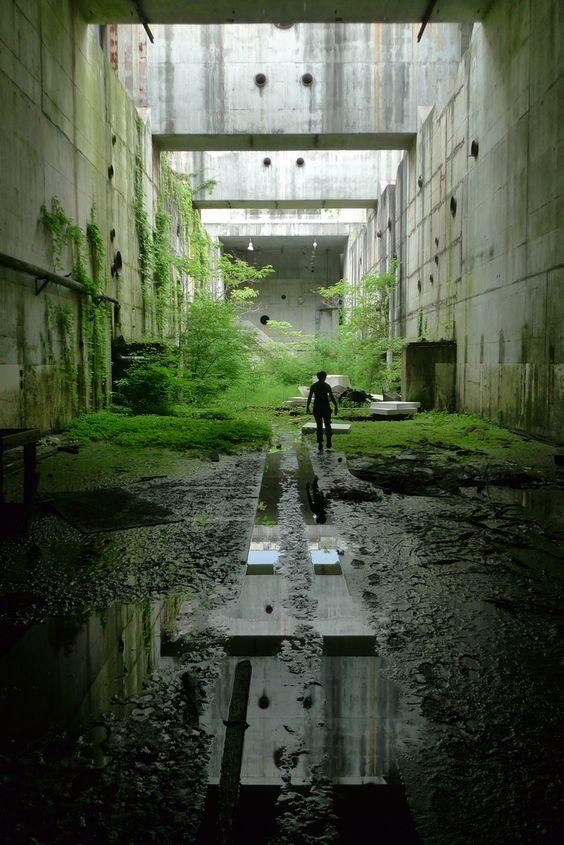
We live in a world of entropy. The things about us, whether they be vehicles, roads, homes, computers, or kitchen cabinets, are perpetually threatened by entropy. Driveways and walls crack, grass grows in the seams of sidewalks, coffee cups get chipped, cars get scratched and dented, decorative bushes in yards get overgrown and grow wildly in all sorts of different directions, and the doors of kitchen cabinets come off of their hinges. Everywhere domestic objects harbor anarchistic and insurgent wild things within them, constantly threatening to emancipate themselves so as to become free for their own adventures.
And then these:
The domestic objects that make up our everyday experience in our concernful dealings with the world consist of a unity or synthesis of the symbolic and the material. The symbolic is like a net thrown across the earth, lacerating it and structuring it. It transforms the analog into the digital, the continuous into the discrete, or the smooth into the striated….
What, then, is the wild thing? If I gave an answer to this question, I fear I would undermine the entire point, for then I would transform the thing itself into the thought-thing, and thereby domesticate the wildness of the wild thing. I would involve myself in a performative contradiction.
I wonder how many different ways these kinds of statements have been issued by philosophers over the years? How many scholars have implored their readers to avoid the traps of foundationalism, reification, ideology, mythic givens, formalizing structures, etc. —those many tendencies in language and intellectual habit that generate dogma and delimit the semantic possibilities of so-called wild thinking?
As Levi restates it here again so eloquently, far too many intellectuals fail to genuinely acknowledge and give voice to the relative autonomy and vibrant potency of non-linguistic materials and systems in their philosophies. As a consequence, such theorists far too often continue to mistake their conceptions and descriptions— what Bryant calls their ‘thought-things’— for the reality of things themselves. This is, of course, the old and persistent ‘map v. territory’ dilemma.
Alternatively, Bryant asks us to become more aware of how reality is always more than what we think or can think about it. The myriad of real things and processes without and within us always both overflow and underflow our conceptions of them. Which is to say, any configuration of elements sufficiently organized to enact causal effects do so via their inherent determining properties, relations, and depth of organization. This amalgam of properties and relations — what I refer to as assemblage-relations — expresses very relatively independent embodied capacities, or what neo-materialist theorist Jane Bennett has called ‘thing-power‘.[1] To put this more philosophically, we can say that noumena are indeed fanged—possessed of relatively independent causal affectivity, and capable of acting upon us and the planet in ways unencumbered by what human believes or says about them.
Indeed, such relatively autonomous assemblage-relations often cut through our casual caricatures and certainties to disrupt the comfort of habitual expectations, and often in ways that will generate sensations of weirdness or eeriness, and horror, which, in particular circumstances, can even result in significant trauma.
As S.C Hickman writes:
Reality cannot be reduced to Mind, Language, or Scientific description. Reality is an open in indefinable ever-changing realm of metamorphosis within which we are but one among many entities, each impinging upon the other in a carnival of existence. The point of this is that the Real exceeds our explanatory explanandum, and cannot be reduced to any description whatsoever. Instead it needs a speculative aesthetics, a poetry of existence – at once inventive, trope ridden, and empowered to lure what is hidden and unknown out of its dark places.” [2]
Or, as philosopher Katerina Kolosova frames it:
The real is not necessarily a physical exteriority. Rather, it is an exteriority in the sense that it is outside the reach of our linguistic intervention, appropriation and re-invention. The real is an effect that is experienced as violence (as the implacable limit to our signifying automatism), as a linguistically non-negotiable limitation, as that which Lacan would call the tuché that happens to the (signifying) automaton in the form of trauma. [3]
Opening a space of reflexive consideration of the difference between how we conceive and what we conceive is a traditional concern of western philosophy, but, more importantly, it is a flashpoint for critical thinking and pragmatic action. It breeds humility, curiosity, and a willingness to question our own assumptions in ways that can make us better researchers and even better people.
2.
The other post that really interested me (found here) has Levi addressing a student’s concern with the some of the ideas expressed in the text discussed above.
Levi paraphrases the student’s concerns this way:
“Professor Bryant”, he said, “throughout your talk you’re very critical of philosophy and how it converts the thing into the thought-thing or replaces the thing with the thought-thing. But isn’t the conversion of the thing into the thought-thing a good thing? Isn’t that how we know things? If we can’t convert the thing into the thought-thing, doesn’t that entail the ruin of philosophy and science?”
It’s a perceptive question, and it cuts right to the crux. Levi’s response is equally insightful and ultimately instructive:
This is a very difficult point to articulate because I am essentially trying to indicate or allude to something that is outside of language, even if it is entangled in language all sorts of ways. When I make the claim that the cardinal sin of philosophy (and many other forms of theory besides) consists in converting the thing– in its materiality –into the thought-thing, I am trying to articulate the way in which the thing is replaced by the signifier. Any attempt to explain this is necessarily doomed to failure. It simply cannot be done because I am attempting to point at something that is outside of discourse, outside of language, outside of conceptuality; yet, in the very act of doing this, I bring the thing into language, discourse, and conceptuality.
To be sure, there is nothing we can say about potent materialities (as temporal processual assemblage-relations) that doesn’t already entail a kind of capture, or domestication, viz. the very semiotic (linguistic, symbolic) character in which humans use to register make-sense of our experience. Our interpretations and classifications, our stories and poetics, all function to bring the wilder world of causal and sensory interactions into practical understanding, and thus to partially tame and control. Everything we say or write about autonomous things, assemblages, flows, and the processes that obtain among them, are more or less a series of useful descriptions and caricatures linguistically conjured to navigate and interact with-in a dynamic, multi-potent reality— what Cornel West has so eloquently referred to as “the funk” of life.
A real danger arises, however, in how some people and narratives tend to overdetermine what they encounter with how they interpret it, mistaking the ‘map’ for the ‘territory’, and then operating from that mistaken orientation. This conceptual overdetermination, rooted in encultured perception and ideologically charged cognitive models, not only domesticates ‘wild’ entities but also often tends towards acts of semiotic violence against the so-called objects of that perception, circumscribing and inducting them primarily into the service of human interests. Nowhere is this more evident than in the way some people manipulate and de-ethicize specific species via labels that regard them as “livestock”, or simply “meat”, for food instead of as sentient animals with full emotional lives and unique personalities. Most languages are more than capable of this type of thin-slicing cognitive reduction.
Such varieties of semantic capture can also become a form of self-limiting— a ‘cage’ built of concepts and dogma that gathers and structures experience into algorithmic decisions and default perceptions, often with very discernable psychologically disempowering results. By entrapping themselves in doxa this way people can easily fail to perceive, adapt to, or appreciate what is occurring both around them and within them viz. the many non-linguistic realities in which we are embedded.
Yet, as suggested above, even when people methodologically open themselves to the wider richness of reality, reality will always continue to allude us to some significant extent. The objects of our attention remain more than what they seem, even as they are entangled with the very circuits of language and communicative gesturing that animate our all-too-human concerns. In this way the relative autonomy assured in the depths of the material properties and constituent relations of things remain relatively resistant to the pretensions of conceptual domestication.
3.
In recent decades, a significant body of research has been accumulating and converging around a cluster of related scientific theories often collectively referred to as as ‘4EA.’ Taken together, this bundle of science and theory describes cognition as simultaneously “embodied, embedded, enacted, extended, and affective.”
Mark Rowlands (2010) outlines the various elements of this convergence this way:
- Embodied: involving more than the brain, including a more general involvement of bodily structures and processes.
- Embedded: functioning only in a related external environment.
- Enacted: involving not only neural processes, but also things an organism does [practice and performance].
- Extended: connected with an organism’s environment.
- Affective: involving emotional attunement to stimuli in terms of meaningful salience thresholds (e.g. good/bad, inviting/threatening, etc.).
These descriptions attempt to summarize the various aspects of worldly perception, cognition and behavior, and propose an alternative to dualist philosophies of ‘mind’ through a novel emphasis on how the dynamic interactions and expressions between brain, body and ecosystems are inseparably intertwined, and work together to co-create, or ‘bring forth,’ semiotically rich embodied experiential worlds.
As early pioneers of 4EA theory Varela, Thompson, and Rosch (1992) write,
“the species brings forth and specifies its own domain of problems …this domain does not exist ‘out there’ in an environment that acts as a landing pad for organisms that somehow drop or parachute into the world. Instead, living beings and their environments stand in relation to each other through mutual specification or codetermination” (p. 198).
From these researchers we get a hint of why conceptual domestication and overdetermination can be so problematic. If we are in mutually impacting, co-determining relationships with other embodied agents and material systems, then imposing our specific mode of being, relating, or knowing on others inherently limits our ability to perceive the depth and range in complexity of things. Semantic domestication hampers attempts to become intimate with, learn from, and form ethical relations with the multitudes of entitles and systems at play in the cosmos. Therefore, alternatively, to obtain a fuller awareness of the conditions within which we co-exist with others we must find ways to remain open — conceptually as well as existentially — to the ways that more-than-human realities exist and express themselves, in-and-of themselves.
Years later, revisiting the status of 4EA theories, Di Paolo, Rhohde, and De Jaegher (2014) write:
“Organisms do not passively receive information from their environments, which they then translate into internal representations. Natural cognitive systems…participate in the generation of meaning …engaging in transformational and not merely informational interactions: they enact a world” (p. 33).
If this is the case, closing ourselves off intellectually to the vibrant properties, movements, effects, and depth of other beings and ecological forces through conceptual overdetermination pre-limits our ability to intelligently navigate, adjust, collaborate, or, perhaps most importantly, adapt to and within such enacted conditions. Semantic domestication is a barrier to genuine encounters, thwarting efforts to calibrate our expectations and aspirations within the very conditions of material/ecological possibility that must be adapted to.
The implications of this relational, co-constructive and ecological understanding of cognition and perception are many.
As eco-theorist David Abram writes in The Spell of the Sensuous (1996):
“Caught up in a mass of abstractions, our attention hypnotized by a host of human-made technologies that only reflect us back to ourselves, it is all too easy for us to forget our carnal inherence in a more- than-human matrix of sensations and sensibilities. Our bodies have formed themselves in delicate reciprocity with the manifold textures, sounds, and shapes of an animate earth — our eyes have evolved in subtle interaction with other eyes, as our ears are attuned by their very structure to the howling of the wolves and the honking of the geese. To shut ourselves off from these other voices, to continue by our lifestyles to condemn these other sensibilities to the oblivion of extinction, is to rob our own senses of their integrity, and to rob our minds of their coherence. We are human only in contact, and conviviality, with what is not human.”
4EA researcher Shaun Gallagher (2014) has also pointed out how embodiment and enaction deep entanglement with other entities suggests a type of pragmatist philosophy and orientation to life and thought that explicitly rejects conceptual overdetermination. Gallagher argues that the philosophical school of pragmatism can even be understood as a forerunner of embodied, enactive and extended approaches to thinking. And this seems consistent with my own understanding of both 4EA and pragmatism.
For example, pragmatist sociologist John Dewey wrote that “the brain is essentially an organ for effecting the reciprocal adjustment to each other of the stimuli received from the environment and responses directed upon it” (1916, pp. 336–337). And neo-pragmatist philosopher Robert Brandom has commented that “a founding idea of pragmatism is that the most fundamental kind of intentionality (in the sense of directedness towards objects) is the practical involvement with objects exhibited by a sentient creature dealing skillfully with its world” (2008, p. 178).
These two statements taken together describe the co-constituent entanglement between our practical and lived embeddedness in ecological systems and our ability to know and respond (adapt) to the circumstances therein. In fact, the main thrust of much of both 4EA research and pragmatism seems to converge on an interpretation of ‘intellectual activity’ as a derivative and emergent capacity following from the material and energetic interplay between brain, body and world. And importantly, for us here, reality itself must be understood as not just something the brain imposes upon or merely constructs, but, rather, as a relationship that brains, bodies and external objects, flows and forces are having (enacting), and so on relatively equal footing as causal factors in how particular worldly encounters and relations come about.
Communication and intellection can then be understood to be less and less about mobilizing ready-made conceptions or so-called transcendental Truth claims — Bryant’s “thought-things” — and more and more about the pragmatic coordination and adaptation of ecologically embedded sentient bodies through mobilizations of various cognitive and environmental resources for performatively navigating situations and worlds. Conceptuality, from this perspective, is simply one aspect in a much thicker and more extensive (and mostly non-linguistic) relational process—a series of existenzial games that particular kinds of bodies play among various other bodies and forces in different contexts.
4.
Ludwig Wittgenstein contended that words can only acquire meaning by their use in contexts, and then attempted to track how their use was inexorably tied up with social practices, or the activities that people do collectively. He eventually arrived at the notion of ‘language-games’ to draw attention not only to how languages functions socially, but also to how all linguistic and conceptual activity and intentions are generated from the socially strategic concerns and games played by the people who use it. What we do, we do with others — and Wittgenstein painstakingly showed how language and thinking are always already conditioned by the extra-linguistic social activities where people pursue interests through initiating and participating in the quasi-structured games of normative social life.
The classic example of a language-game is the so-called “builder’s language” introduced in §2 of Wittgenstein’s masterpiece Philosophical Investigations (1953):
The language is meant to serve for communication between a builder A and an assistant B. A is building with building-stones: there are blocks, pillars, slabs and beams. B has to pass the stones, in the order in which A needs them. For this purpose they use a language consisting of the words “block”, “pillar” “slab”, “beam”. A calls them out; — B brings the stone which he has learnt to bring at such-and-such a call. Conceive this as a complete primitive language.
What is important here is that the builder and his assistant play a particular learned language-game that makes use of pre-established and acknowledged signifiers in order to do something in the world in a particular: namely, collaboratively build. Language-games are, for Wittgenstein, concrete social activities and behaviors that involve the use of specific forms of language. By describing a wide variety of language-games—the countless ways in which language is actually used in human interaction—Wittgenstein meant to show that “the speaking of a language is part of a set of activities, or form of life.” The meaning of a word, then, is not found in some supposed correspondence between it and a given object, but rather in the pragmatic use that is made of it by actual people in “the stream of life.”
Throughout his later work, Wittgenstein maintained that even strongly rule-governed language-games were not static or bound. All language-games remain open to change, in numerous ways, and continue to evolve as people use and re-use phrases, framings, and arguments in new and sometimes idiosyncratic ways. These changes result in what linguistics call ‘semantic drift’, or what I describe as semiotic mutation — novel inflections or emphases, or new combinatory significances brought about by different iterations or creative uses. And I argue that this characteristic mutability of language-games opens out to a distributed dynamism and evolution of embodied human communicative exchanges that necessarily renders philosophical thinking (and all discourse formations) always already provisional (and revisable) to varying degrees.
It is this provisional and intrinsically open, yet embedded and entangled, character of language and cognition that I believe philosophers and theorists ought to lean into as a means of mitigating the negative effects of conceptual capture (dogma) and overdetermination (doxa) and allows the potency or depth-capacity of bodies, systems and flows to show up for us more earnestly in the many negotiations occurring between the relatively autonomous and entangled agencies that constitute daily life.
5.
What should be clear by now is the call for more relational, embodied, and open philosophical (and theory-praxis) approaches that axiomatically oppose conceptual domestication in order to gain increased intimacy with the realities within which we exist. Such approaches echo Anthropologist Eduardo Viveiros de Castro’s (2009) calls for a “permanent decolonization of thought”, wherein experts and interlocuters maintain intellectual and affective openness to the ontologies and orientations of different peoples based on ethical and practical grounds.
To accomplish such openness, I suggest, entails first and foremost a feralization of philosophical thinking that habitually refuses dogmatic self-sufficiency in favor of wildly pragmatic and critical descriptions, classifications, and communicative exchanges. To be sure, the process of feralization would require a significant and methodological deflation of the human tendency towards semiotic over-determination of reality according to particular, all-too-human categories and concerns. By deemphasizing domesticating conceptual idols and linguistic formulas we can, instead, begin reorienting cognition towards more situational and embodied ways of sensing, communicating and behaving.
My proposal is that the loosening of domesticated thought begins with making operant use of a type of axiomatic negation: an intellectual protocol and cognitive cue for auto-deflating habitual and dogmatic tendencies and closures within thought itself. Axiomatic negation instantiates, viz. a philosophical heuristic, a dispositional logic of refusal of closure and certainty, and a refusal to be captured by the institutional or idiosyncratic ideologies external to our everyday acts of cognitively navigating and negotiating within worlds. This axiomatic refusal, I believe, is cognitive reflexivity taken to its most practical conclusion: an auto-deconstructive gaming of the very activity of philosophical thinking of-itself.
This shift in intellectual orientation not only allows us to register our everyday experiences differently, it also also helps foster pragmatic action, attitudes, dispositions, and ways of using language that are more open and responsive (thus adaptive) to the potent non-linguistic agencies and forces among us.
Such cognitive adjustments, in Marilyn Strathern’s words, allow us “to create the conditions for new thoughts” (1988: 20).
As I have written elsewhere:
What rests beneath our zombie delusions and mythologies are countless sensuous bodies. What is revealed is a world composed of material entities in energetic interactions that exist within a vast mesh of ecological metabolism. Bodies jostle and exchange in, against, across and through one another in what we could conceive as transcorporeal (‘across-body’). What is of value in this view is that while our cognitions are unreliable, shot through with myth-making, we nonetheless have our embodied sapience, the wisdom of bodies that are practically engaged in a world structured and coordinated by and as assemblages of other bodies.
Instead of continuing the habit of over-coding, and generally relying too heavily on semiotic content and symbolic orders, we can start to better understand our everyday encounters as consequentially entangled, embodied, enactive, and pragmatic dances with-in various mixed material-energetic life conditions.
Oh so meta, I know… but hopefully not in a way that seeks to reestablish any previous dogma, semantic regimes, or dependencies on particular kingdoms of reference. Not even ‘meta’ can escape the corrosive yet liberating effects of axiomatic negation as a decisive move towards rewilding philosophical thinking as a living practice. Instead, what remains in the wake of axiomatic negation is the need to re-prioritize embodied practical encounters and skillful perception, and to cultivate an openness to the relative autonomies, surprises, patterns, and overt materiality of worldly existence. This openness enacts a perpetual unsettling of the privilege and control that language, logos, ideology, and culture has been granted, or violently installed, towards more contextual, practical and visceral relations within the natural world.
What might evolve from these types of shifts and refusals are new species of abstractions: feral philosophies that thrive on auto-reflexivity and animated by deeply pragmatic concerns. In short, beyond the overdetermination of dogmatic abstraction and ideology we begin to register our experience in ways that afford thinking and talking about things in a new manner and tone, and with different emphases, concerns, and, more importantly, practical outcomes.
“The only thing that makes life possible is permanent, intolerable uncertainty: not knowing what comes next” — Ursula K. LeGuin,
At its core, an acceptance and willingness to operate from the inherent limitations and mutability of language and thought is to make explicit the productive character of the unknown, or the unknowable, as that which always exceeds capture by conceptuality. Tarrying with perpetual uncertainty activates our creativity by opening our thinking to unexplored terrains of possibility.
As sociologist Andrew Pickering puts it:
What if the unknowable was not simply a blank to be filled or a defect to be rectified, but instead, an inescapable facet of everyday existence, which continually regenerates itself as we attempt to know and interact with the world?
How many of our personal and social problems are the unpleasant result of a dogmatic adherence to some ideology and prior belief? How many of us stunt our learning and ability to adapt by interpreting our experiences through default positions and habitual reference?
The feralization of thinking is an opportunity for reprioritizing our concerns and for behaving in less dogmatic and ideologically programmable ways. Taken together, an appreciation for the unknown and the undomesticated has the dual advantage of anchoring epistemic humility, and, with this, intensifying and expanding our curiosity. It is with humble curiosity that most of the dazzling creativity and innovation found throughout the planet has been brought into being. And evolving and honing this wilder disposition allows for more conscious, curious and flexible deployments of communication, theory and narrative.
As Bryant suggests:
We cannot dispense with theory and theorization– here I think my student is absolutely right –which strives to grasp the thing in thought, but we must theorize in such a way that our thought perpetually marks the difference between the thing and the thought-thing, that refuses the substitution of the thing with the thought-thing, and that calls on us to place us in a space of encounters that require us to encounter the other of thought and that challenge our conceptual encounters. Like the psychoanalyst who exposes themselves to the midden pit of the analysand’s speech, we must open ourselves to encounters with materiality of all kinds that challenge the reduction of the thing to thought and the false sense of mastery that the thought-thing brings.
Let’s perpetually mark that difference again and again, perpetually. And in doing so generate new species of abstractions with which we can philosophize in more embodied, relational, and ecologically sane ways.
☆
‘Feral Philosophy‘
feral philosophy is real philosophy, only wilder.
feral philosophy is thinking that was domesticated but has gone wild.
feral philosophy began as academic, scholarly, studied, but turned surly, stoic, comedic, poetic. It became wild and unkempt through neglect or lack of care. It ran off, chastised, tail between legs. It was driven off because it was not thought attractive to tidy minds. It escaped captivity, desperate to breathe fresh air.
feral philosophy can be pungent, awkward, stand-alone, weather-proof. It can be skewiff, cantankerous, skittish, even fugitive. It isn’t well-tempered or pragmatic. It sniffs out conventional or received wisdom.
feral philosophy is often unfinished, but it is not untutored. It matters that feral philosophy was domesticated before it went wild.
It shouldn’t be confused with marketing, new age or eastern philosophy. Its roots are in western philosophy, gone wild on the vine. Its pedigree goes back to Heraclitus, not Confucius. It’s a descendent of Aristotle, not Buddha. It is neither resigned nor layback. It is ‘old age’ as opposed to ‘new age’.
feral philosophy is an aspiration.
NOTES:
[1] See also: Jane Bennett, Vibrant Matter: A Political Ecology of Things (2010)
[2] S.C Hickman, “On Dark Realism – Part 2” (2017)
[3] Katerina Kolozova, Toward a Radical Metaphysics of Socialism: Marx and Laruelle (2015)
.


 ENTANGLED ECOLOGIES
Leave a reply to From The Ruins – ENTANGLED ECOLOGIES Cancel reply