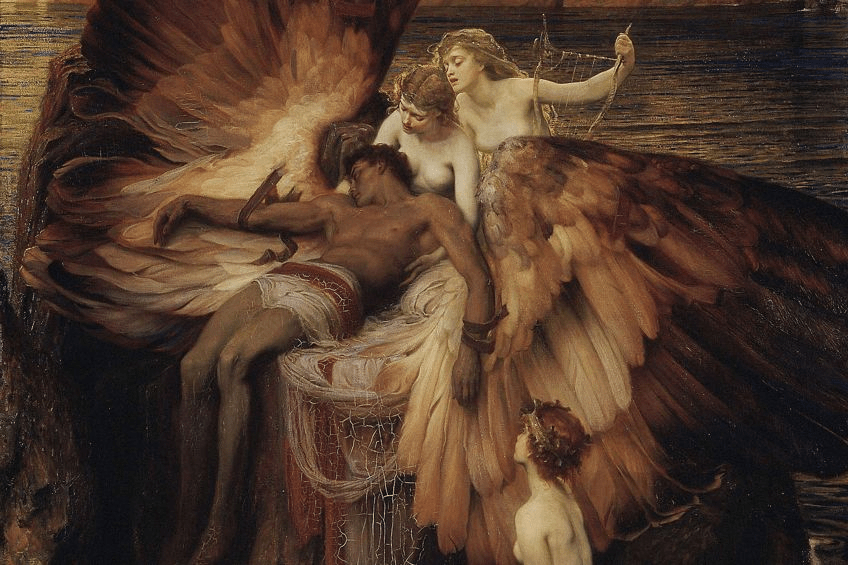
“If we are not to be undone by the machines of our own making, we can’t afford to merely stand against them. ‘But where the danger grows,’ Holderlin writes, ‘there grows the saving power also,’ and so as the machines of progress hurdle civilization into the catastrophic horizon of planetization, the great task for humanity lies in the achievement of an ‘open technology.’”
— JF Martel
French philosopher Henri Bergson saw clearly the double edge of technological progress. Technology, for him, was a dazzling expression of human creativity and intelligence—but also a carrier of grave dangers.
In Creative Evolution (1907), Bergson still viewed technology through an optimistic lens. By the time he wrote The Two Sources of Morality and Religion (1932), that optimism had darkened. Technology was no longer just a threat of physical warfare; it had become a source of something deeper: spiritual decadence.
His warning was stark: our technical powers were racing ahead of our spiritual and moral growth. The 19th century, he observed, had given humanity “more tools than he had made during the past thousands of years”—yet those tools had spawned “moral, social, and international problems.” Why? Because the human soul had not grown enough “to fill this new body with spiritual life.” That, in essence, is the meaning behind the quote’s haunting phrase: being “undone by the machines of our own making.”
What, then, would Bergson offer as a possible remedy to the malaise of global machinic ascendency?
Something of a response becomes clear through Bergson’s famous divide between the closed and the open society. The closed society is humanity’s natural, default posture: a static moral and religious order, designed solely to ensure the survival and cohesion of a limited group. Its very logic is to “include a certain number of individuals and to exclude all others.” The catastrophic horizon is nothing less than the dominating triumph of this closed logic—a global system driven by unchecked mechanism and soulless material expansion, where genuine creativity and moral growth have no place.
Bergson’s prescription against the peril of a closed, mechanized world is what he called an open society—the living, breathing alternative to the sealed and static order of the closed. An open society is restless, inventive, inclusive: a social formation animated by what Bergson called the “mystic” or a higher order of creative emotion. For Bergson, the great human task is to wrench humanity from its default—the closed state—and steer it toward the open. Creative invention can be simultaneously open, moral, and technical.
But the open society is never a given. It is a necessary, nearly impossible goal: a sacred calling we are held to, even as we stumble toward it. And in such a society technology becomes less a gadget or platform and more a living infrastructure for collective creativity—one designed to keep society fluid, inclusive, and responsive to the unexpected. In short, it would be both ethical and adaptive.
 ENTANGLED ECOLOGIES
Leave a comment