Throughout human history, those who first gained awareness that the prevailing story of time no longer matched observable reality were rarely standing at the center of their culture. Individuals noticed accumulating discrepancies were often scattered at the margins, and seem to been people who perceive structural contradictions that others collectively overlook.
What if this isn’t merely temperament or ideological disposition? What if some perceptual orientations are simply wired to register pattern discontinuities more readily, precisely because they stand somewhat outside the mechanisms that normally filter incoming information for social coherence?
Pattern Recognition
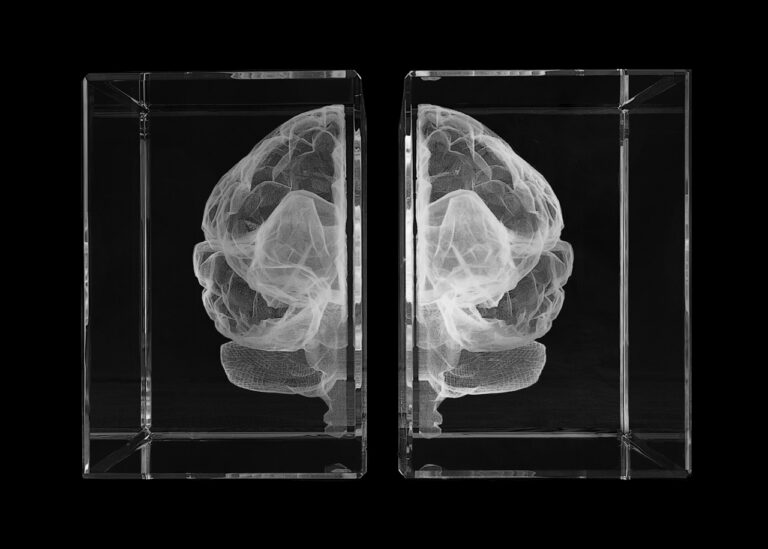
The fundamental function of all animal brains is to encode and integrate information acquired from the environment, then generate adaptive behavioral responses.[1] Sensory information is encoded as patterns inherent in inputs—visual and auditory patterns being most extensively studied—and these encoded patterns can be recalled, compared, and manipulated to guide decision-making.[2]
What researchers term ‘superior pattern processing’ (SPP) has become exceptionally sophisticated in humans through expansion of the cerebral cortex, particularly the prefrontal cortex and regions involved in image processing.[3] This enhanced capacity enables not merely recognizing patterns in the environment, but also generating novel patterns—imagining scenarios that don’t yet exist, fabricating possibilities, and then transferring complex patterns to other individuals through language.[4]
Awareness of faltering societal systems and narratives therefore begins as a pattern-recognition. Before it becomes analysis, advocacy, or grief, it is simply the act of registering that the cultural narrative no longer matches observable reality. The story of perpetual growth on a finite planet, of technological salvation arriving just in time, of political systems gradually correcting their course—these narratives fail even basic coherence tests. Yet most people never register the failure.
This isn’t primarily about intelligence. It’s about the patterns one’s cognitive apparatus is oriented to detect, and what filtering mechanisms shape perception before it reaches conscious awareness.
Decades of research demonstrates that people can arrive at starkly different perceptions of identical situations.[5] In a classic study, football fans watching the same game reported vastly different accounts based on team affiliation—different enough that “the game seemed to reflect many different games, with each version of the events as ‘real’ to one person as other versions were to other people”.[6]
This divergence reflects that humans are motivated processors of information.[7] Motives—any wish, desire, or preference concerning the outcome of a reasoning task—influence how people select, evaluate, and weigh available information.[8] Researchers have labeled this “motivated reasoning.”
Two well-researched phenomena are particularly relevant here: Identity-protective cognition describes how individuals adopt empirical beliefs of groups they identify with to signal belonging. Cultural cognition leads people to perceive greater risk in behaviors they disapprove of for other reasons.[9] Critically, these effects are not reduced by intelligence, information access, or education. Greater scientific literacy and mathematical ability can actually increase polarization on politicized issues—higher capability appears to boost people’s ability to interpret evidence in favor of preferred conclusions.[10]
The implication is striking: the very cognitive machinery that enables sophisticated reasoning can, when oriented toward social cohesion, become more effective at rationalizing consensus than detecting the shifting dynamics and transitional states of structural reality.
Relative Epistemic Independence
Of course, no one acquires knowledge entirely firsthand. We are all epistemically dependent—relying on trusted sources for the vast majority of what we claim to know.[11] How do you know George Washington was first U.S. president? You learned from a teacher whose epistemic authority you accepted. There’s nothing inherently wrong with this; the specialization of human knowledge makes such dependence unavoidable.[12]
The problem arises in determining who possesses sufficient epistemic authority to qualify as trustworthy. Much erosion of shared and constructed reality stems from disagreement about whom to believe.[13] Whom should a nonexpert trust about vaccine safety, or election legitimacy, or climate projections? Most people cannot determine these matters independently, yet cannot agree on which experts merit trust.
This dependence creates vulnerability. When the prevailing epistemic environment is shaped by narratives that prioritize social stability over accuracy, epistemically dependent individuals will tend toward consensus—even when that consensus diverges from observable reality.
Some individuals, however, exhibit what can be called relative epistemic independence: a reduced tendency to let group identity and social consensus determine our empirical beliefs. This isn’t oppositionality for its own sake. It reflects a different relationship between perception and social reward—one where accurate pattern registration takes precedence over agreement or identity protection.
Cross-cultural research on epistemic norms reveals interesting variation in this regard. Studies comparing German and Japanese children found that both groups show affective sensitivity to error when informing others, and similar ways of solving conflicts between accuracy and consensus norms. However, Japanese children trusted consensus on labeling more than accurate labeling at a later age than European children.[14] This suggests that cultural factors modulate how individuals balance competing epistemic demands.
The concept of epistemic pluralism—a persistent state of negotiation about empirical facts—is promoted widely in contemporary societies. But pluralism operates differently for different individuals.[15] Some experience it as uncomfortable ambiguity requiring resolution; others navigate it by aligning with trusted epistemic authorities based on identity markers rather than accuracy tracking.
Research on personality and social cognition identifies dissociable profiles that exhibit contrasting cognitive and affective dispositions.[16] Individuals characterized by flexible and adaptive personality styles express higher action orientation, better visual perspective taking, superior interoceptive accuracy, and less imitative tendencies compared to those showing more inflexible patterns. These characteristics point toward more efficient self-other distinction and higher cognitive control.[17] Thus, some individuals are cognitively configured to maintain clearer boundaries between their own perception and social influence—a configuration with implications for detecting when cultural narratives diverge from structural reality.
Perceptual Diversity
From an evolutionary perspective, cognitive variation exists because different environments select for different ways of seeing. The primary function of consensus-oriented cognition has been maintaining group cohesion—preserving stability through shared narratives and emotional synchrony. In stable environments, this orientation serves survival.
But environments are not always stable. When conditions change in ways that require new responses, perceptual styles that were previously marginal become suddenly valuable. Those who registered early that the map no longer matched the territory, who noticed accumulating discrepancies while others maintained collective confidence—these individuals possess information the group needs.
The challenge is that groups tend to pathologize perceptual divergence precisely when it would be most useful. In scientific communities, for example, epistemic inclusion—dynamically changing research paradigms during interaction with diverse methods and hypotheses—is essential for benefiting from cognitive diversity.[18] Yet historically, novel ideas from less prominent researchers have been dismissed precisely because they diverged from mainstream hypotheses. The delayed acceptance of HPV as the primary cause of cervical cancer, despite evidence, exemplifies how exclusion of minority viewpoints can have lethal consequences.[19]
What philosopher Thomas Kuhn described as “normal science”—periods when researchers work under a dominant paradigm—involves following established research paths while textbooks promote dominant views.[20] This cognitive narrowing serves continuity but impedes paradigm shifts when accumulating anomalies render the dominant framework inadequate.
Again, cultures inherit deep cognitive templates that shape what members perceive as real. The Western template—linear progress, human mastery over nature, endless expansion—functions as a perceptual filter. Information that would destabilize this template is subtly screened out through the automatic rewards of social alignment.
Individuals with greater relative epistemic independence are less susceptible to this filtering. Their perceptual apparatus registers structural contradictions earlier because it is less constrained by the need to maintain narrative coherence at the social level. When the cultural story contains unresolvable tensions—infinite growth on a finite planet, technological salvation without fundamental reorganization—the epistemically independent mind registers the friction.
This isn’t about negative bias or pessimism. It’s about pattern processing that prioritizes coherence between observations rather than coherence between observers.
The relief many collapse-aware individuals describe upon finding explanatory frameworks isn’t primarily emotional—it’s cognitive. The dissonance between perceived patterns and available narratives finally resolves. What seemed like personal alienation becomes comprehensible as accurate perception of actual structural conditions.
The adaptation question becomes: how do human systems incorporate the perception of those who see structural contradictions clearly? How do we create conditions where epistemic independence is valued rather than punished?
Research on epistemic inclusion suggests that integration—adjusting oneself to fit the majority view while contributing minor amendments—is insufficient. True inclusion means dynamically altering perspectives during interaction, preserving marginalized views, and allowing group knowledge to exceed the sum of individual stances.[21] This requires what some philosophers call “epistemic tolerance”—openness to competing theories and readiness to include them in mainstream discourse.[22]
Computer models of scientific discovery demonstrate the importance of transient diversity—periods when investigators explore different hypotheses before reaching consensus.[23] Groups are most effective when they first explore many possibilities and only later converge once sufficient support accumulates.[24] This principle applies beyond formal science to collective sense-making about systemic conditions.
Individuals with high relative epistemic independence serve this exploratory function. They maintain hypotheses that don’t yet have consensus support, pursue pattern recognition that hasn’t been socially validated, register anomalies that consensus-oriented cognition filters out. Their divergence from consensus, when effectively included rather than excluded, provides the group with early warning about accumulating structural contradictions.
So what might it mean to build cultures capable of testing their own narratives against observable reality? To incorporate perception of those who see gaps in the story, rather than marginalizing them in service of cohesion?
It would mean recognizing that cognitive diversity exists for evolutionary reasons. Different environments select for different perceptual orientations. In stable times, consensus orientation maintains coherence. In unstable times, peripheral vision detects what’s coming. Both are necessary; neither is sufficient.
It would mean understanding that epistemic dependence—reliance on trusted sources—is unavoidable, but that the structure of epistemic authority can be organized to reward accuracy rather than identity reinforcement. This requires institutional mechanisms that protect minority viewpoints, incentivize truth-telling over consensus-maintenance, and create safety for those who register structural contradictions early.
And it would mean recognizing that individuals with high epistemic independence carry information cultures desperately need but often cannot bear to see. They notice when the emperor has no clothes—not because they’re constitutionally negative, but because their perceptual apparatus registers pattern discontinuities that socially-oriented cognition filters out.
In short, there is a particular cognitive freedom in not being fully captured by consensus orientation. It comes with costs—social friction, the exhaustion of perceiving what others avoid, the loneliness of holding patterns others deny. But it also comes with clarity.
Adaptive Divergence
Individuals who perceive structural reality more clearly, who register accumulating contradictions while others maintain collective confidence, who refuse to smooth over growing gaps between story and world—these individuals carry something valuable. They carry information the culture needs but cannot yet bear to see.
The question is whether the culture can learn to listen before the information becomes undeniable. Can institutions can structure themselves to include divergent perception rather than pathologize it? And can consensus-oriented majorities recognize their dependence on those who see otherwise to the dominant views of a given social milieu?
For those who recognize that ways in which their world felt structurally wrong—who carried the dissonance privately before finding explanatory frameworks—the relief is cognitive as much as emotional. Their perception wasn’t broken; it was accurate. The divergence from consensus wasn’t oppositionality; it was pattern recognition operating as it should.
In a planetary situation facing accelerating systemic disruptions, that freedom of perception—that capacity to register structural reality without the filtering of consensus trance—may be among our most essential adaptive resources.
○●◉○●
NOTES:
[1] Mattson, Mark P. 2014. “Superior Pattern Processing Is the Essence of the Evolved Human Brain.” Frontiers in Neuroscience 8 (August). https://doi.org/10.3389/fnins.2014.00265
[2] Mattson (2014).
[3] Mattson (2014).
[4] Mattson (2014).
[5] Lyubykh, Zhanna, Laurie J. Barclay, Marion Fortin, Michael R. Bashshur, and Malika Khakhar. 2022. “Reprint of: Why, How, and When Divergent Perceptions Become Dysfunctional in Organizations: A Motivated Cognition Perspective.” Research in Organizational Behavior 42: 100183. https://doi.org/10.1016/j.riob.2023.100183
[6] Lyubykh, et al. (2022).
[7] Lyubykh, et al. (2022).
[8] Lyubykh, et al. (2022).
[9] Steiner-Dillon, James. 2023. “Why Can’t Americans Agree on, Well, Nearly Anything? Philosophy Has Some Answers.” The Conversation, March 3, 2023. https://theconversation.com/why-cant-americans-agree-on-well-nearly-anything-philosophy-has-some-answers-193055
[10] Steiner-Dillon (2023).
[11] Steiner-Dillon (2023).
[12] Steiner-Dillon (2023).
[13] Steiner-Dillon (2023).
[14] European Commission. 2017. Divided Metacognition: When Epistemic Norms Conflict (DIVIDNORM), Grant Agreement No. 269616. CORDIS EU Research Results. https://cordis.europa.eu/project/id/269616
[15] Steiner-Dillon (2023).
[16] Daniel J. Shaw et al., “You ≠ Me: Individual Differences in the Structure of Social Cognition,” Psychological Research 84, no. 4 (June 2020): 1140, https://doi.org/10.1007/s00426-018-1107-3.
[17] Shaw et al. (2020).
[18] Sikimić, Vlasta. “Epistemic Inclusion as the Key to Benefiting from Cognitive Diversity in Science.” Social Epistemology 37, no. 6 (2023): 753–65. https://doi.org/10.1080/02691728.2023.2258831.
[19] Vlasta (2023).
[20] Vlasta (2023).
[21] Vlasta (2023).
[22] Vlasta (2023).
[23] Vlasta (2023).
[24] Vlasta (2023).


 ENTANGLED ECOLOGIES
Leave a reply to EthicalFeast Cancel reply