European cities are no longer stumbling from crisis to crisis; they are drowning in a polycrisis—a snarled knot of economic instability, social inequality, ecological degradation, and institutional fragmentation that refuses to be untangled one thread at a time. The old urban playbook promoting growth, competitiveness, and global attractiveness has not merely failed, it has actively deepened the very exclusionary dynamics it promised to solve. Even when dressed in the language of “sustainability” or “innovation,” business-as-usual urban strategy remains structurally complicit in the more broader predicament.
Enter the New Urban Economies (NUEs): the scrappy, mission-driven alternatives springing up in cities everywhere, from social cooperatives and solidarity purchasing groups to hybrid community spaces that try to re-embed economic life within social and ecological values. They aim to be laboratories for a better future, but can they survive the bottle-neck pressures of the current planetary polycrisis/mess?
That is the question at the heart of a recent study (2026) by Cristiana Zara and Francesca Forno of the University of Trento mapping eighty-seven such initiatives across Milan, Italy. The researchers wanted to know, concretely, how do these “alternative economies” actually respond when the walls close in? Their answer is a typology of three modes of adaptation—coping, incremental, and transformative—but with a crucial twist: these are not neat categories but a messy, overlapping continuum. Coping is bare survival, the invisible labor of redistributing food and keeping community models alive under resource scarcity. Incremental is the default strategy, translating progressive values into market-friendly, replicable formats that secure stability by aligning with consumer trends and policy incentives. Transformative is the rare bird—the ambitious attempt to reconfigure the rules of the game itself through participatory governance, labour justice, or horizontal food networks. Yet, what the study reveals is that most initiatives do not simply follow one path; they navigate between all three, constantly negotiating between economic pressure, institutional ambiguity, and fidelity to their founding values.
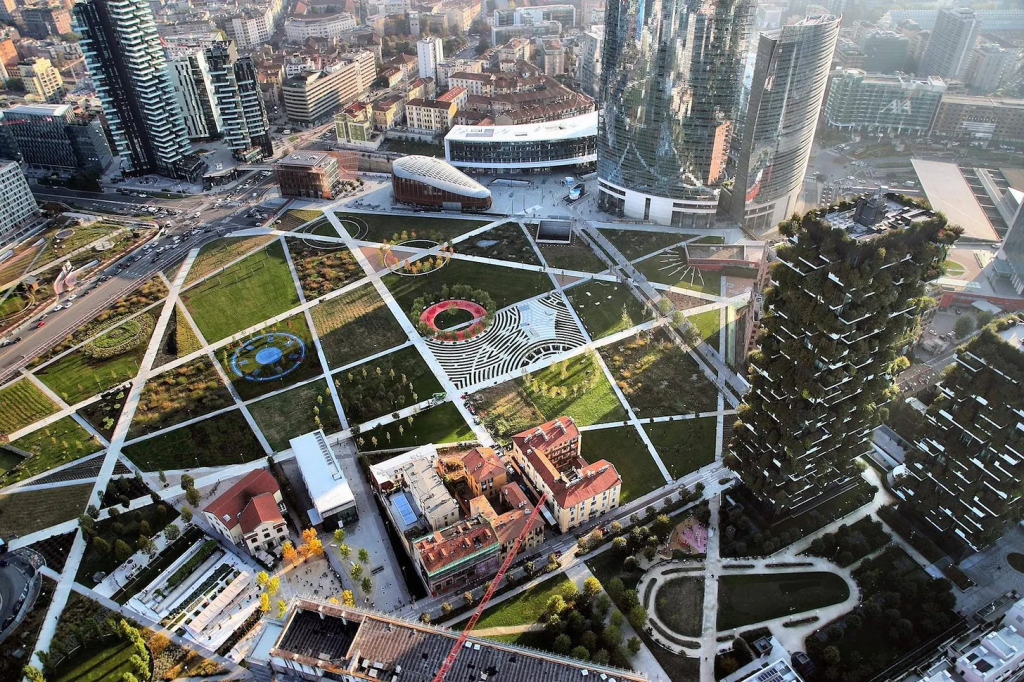
Milan is the perfect petri dish for this investigation: a global innovation hub with glossy sustainability narratives, yet also a city of acute housing pressures, deepening inequality, and environmental stress. The researchers conducted twenty-five in-depth interviews, not merely asking what these initiatives do, but how they survive, what they compromise, and what they refuse to compromise. The findings upend any tidy linear narrative of adaptation. Incremental adaptation is not failure—it is pragmatism, and it is structurally intelligible, the very mode that Milan’s policy environment actively rewards. Coping is not “less than” transformation; it is the foundational labour that keeps economic democracy and solidarity alive, often through volunteer networks and food redistribution that act as social buffers against state withdrawal. The uncomfortable truth is that adaptation is not a neutral response to external shocks; it is strategic positioning within a system that actively shapes which responses are viable and which are punished.
This is where the study delivers its sharpest provocation: polycrisis does not merely limit alternative economies, it actively molds their forms, strategies, and horizons of possibility. The initiatives that attempt genuine transformation are scarce precisely because the barriers to systemic change from within a hostile system are formidable. Transformation is not a one-time choice; it is a constant, exhausting struggle, and even the most ambitious projects often find themselves containing their scale and curating their relationships just to survive. Yet hybridity is not noise or failure; it is the meaningful reality of adaptation under pressure. An urban regeneration project that sustains itself through careful relational work while advocating for systemic change is not confused, it is navigating the only terrain available. This messiness forces us to abandon any romantic notion of pure resistance and instead recognize that meaningful adaptation is situated, contested, never settled, and continually reworked.
Overall, the coexistence and interaction of different adaptive configurations point to the prevalence of hybrid adaptation. Many NUEs combine multiple adaptive logics, highlighting adaptation as a continuous navigation rather than a discrete choice. This hybridity is a pragmatic response to polycrisis, not a sign of incoherence.
So what does this mean for urban governance today? If adaptation is strategic positioning, then policy is never neutral—it actively enables some adaptive trajectories while foreclosing others. We cannot simply ask “how do we support alternative economies?” We must ask the far more uncomfortable question: what kind of adaptation are we structurally enabling? If we reward incrementalism and market-compatible innovation while rendering transformative efforts invisible or punishing them with bureaucratic friction, we should not be surprised when the system reproduces itself.
The NUEs of Milan are about survival, experimentation, and negotiation all at the same time. Their messy, often contradictory efforts to stay alive while staying true to their values demonstrates what adaptation actually looks like in the context of the current predicaments.
Reference:
“Transformative adaptation in times of polycrisis: insights from Milan’s New Urban Economies” (2026)


Leave a Reply