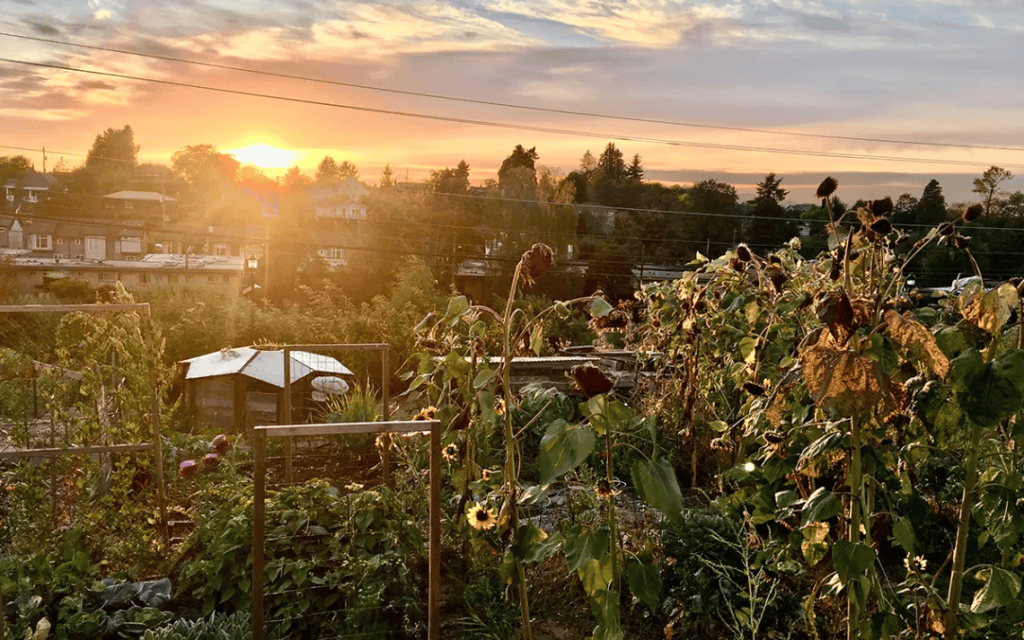
Step into a food forest and your first thought might be that nobody planted anything. There are no neat rows. There is a layered tangle instead: fruit and nut trees overhead, berry bushes beneath them, herbs and perennial vegetables at ground level, perhaps a vine working its way up a trunk. It looks like a woodland because it is designed to behave like one. The difference is that almost everything in it is edible.
So the first surprise is that this wild-looking place is carefully planned. The second is that people are not the only ones doing the work. Volunteers choose the trees, but fungi build the soil, bees handle the pollination, birds carry the seeds, and the weather gets the final say. A food forest is something people make together with other living things, and it only works if everyone involved, human or not, gets something out of it.
The idea is not new. Indigenous communities around the world have long cultivated forest-like plant communities to forage from. What is new is how quickly it is spreading through cities, where community food forests are usually planted on neglected land, tended by volunteers, and open to anyone who wants to help or harvest. They promise several things at once: free fruit, a home for pollinators and birds, shade, and a reason to be outdoors. They also create a place where neighbours who might never otherwise meet end up working side by side.
This post visits three very different examples: a church garden in a former coal-and-steel district in Germany, a reclaimed hillside in Italy, and a forest on public land in Seattle. The question is whether a food forest can repair a piece of land and build a community at the same time, or whether those were ever really two separate jobs. Scientific reviews suggest urban food forests bring real benefits for climate, wildlife, food and community, while also flagging risks and limits. The three cases show both sides.
Dortmund, Germany: A forest in a church garden
Every place inherits what came before it. Huckarde, in western Dortmund, inherited coal and steel. When those industries changed, residents left, and large stretches of post-industrial land remain. It has also inherited a warming climate: in the 2018 heatwave, Dortmund endured 23 hot days in a row.
Against that backdrop came proGIreg, a five-year project funded by the EU’s Horizon 2020 programme. The city, the South Westphalia University of Applied Sciences and the non-profit die Urbanisten set out to cool the district and strengthen the community by working with living things: gardens, plants and soil.
The centrepiece is a community food forest on 3,000 square metres of land owned by the Catholic Church, an unused garden beside the St. Urbanus community centre. The organisers did not unveil a finished design. They ran workshops in which church members and local scouts designed and built the garden together, sharing what they knew so that people could look after it for the long haul.
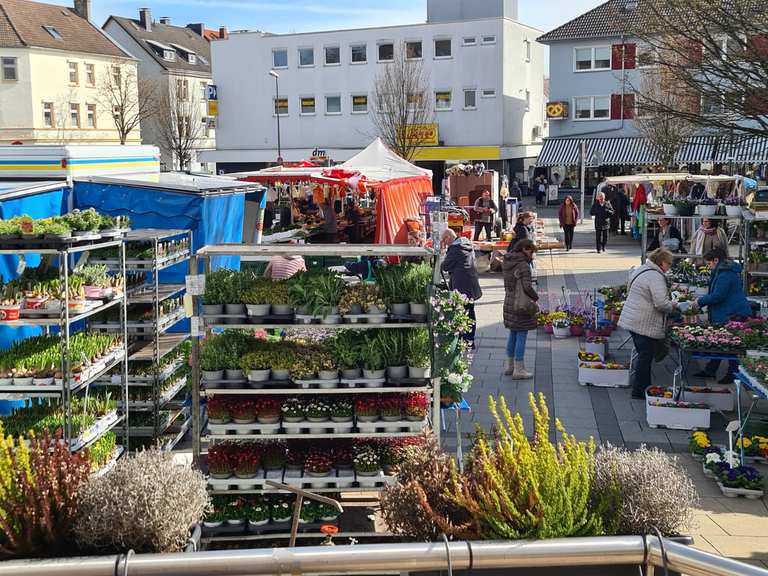
The early work was humble. Down went a layer of humus, then cardboard to smother the weeds, then 20 to 30 centimetres of wood chips. After that, the humans stepped back and let the worms, fungi and microbes take over, slowly rotting the pile into forest soil. So far 35 soft-fruit bushes and 20 wild fruit trees have gone in, including rock pear, elderberry and cherry. The project is open to all, regardless of age, nationality or education, and the hope is that residents will sponsor sections of the forest.
Nearby, the same partners tried a very different way of growing. On the site of the former Hansa coking plant, a greenhouse now raises fish and vegetables together in a closed loop, a method called aquaponics. A place that once baked coal for the steel mills now grows dinner. The produce is not sold. The university and die Urbanisten run the facility and rent growing beds to interested residents. Meanwhile a citizen-led association, Naturfelder Dortmund, has since 2020 turned more than ten sites in and around Huckarde into patches of regional grasses and wildflowers.
Dortmund shows the food forest as public policy: designed with residents, but planned, funded and evaluated by institutions. The results are real. The EU’s own write-up credits the work with a better quality of life, lower temperatures and stronger community ties. It also admits the projects are too small to move the local economy or fix deeper problems, such as higher unemployment in some subdistricts.
That honesty is useful. A 3,000-square-metre garden will not fix inequality. What it can do is give neighbours a shared task and a shared place, and leave the next generation better ground than this one was handed.
Genoa, Italy: Taking back a hillside
Above Genoa’s Cornigliano district, a slope on Corso Perrone known as Area Campi sat unused for decades. Unused by people, that is. Trees and invasive plants had been busy the whole time, and the hillside was thoroughly overgrown.
In 2014 the Comitato 4 Valli, an association of local farmers and livestock breeders, saw an opening. Their tool was a regional law. Liguria had set up a Regional Land Bank to bring abandoned land back into cultivation, so that land its owners cannot manage can be offered to people who will use it. The committee received about seven hectares, or 70,000 square metres, on a free ten-year loan. At the time it was billed as Italy’s largest urban garden.
OrtoCollettivo is unusual because nobody has a plot of their own. The land is undivided. Everyone works the whole hillside, and if someone can’t turn up, someone else covers the job, to everyone’s benefit. Membership is free and hours are flexible. When the project was announced, more than 700 people applied for about 300 places, and volunteers have included unemployed residents and asylum seekers.
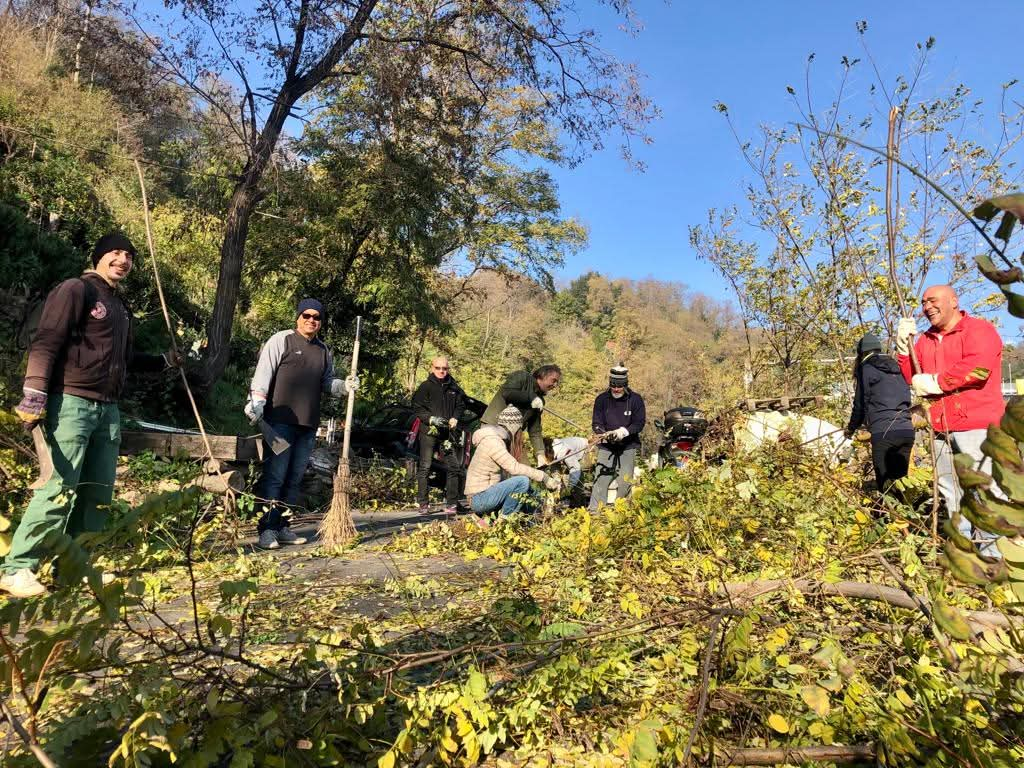
The first job was repair, not planting. A slope has its own ideas about where soil and water should go, and the volunteers had to come to terms with them: mending small landslides, managing runoff, restoring the woodland and building timber terraces to hold the earth in place.
Growing came next, along permaculture lines. Mixed plantings keep pests down without pesticides, and free workshops introduce people to food forests and edible plants. Participants can trade labour for fresh produce, a small experiment in getting fed without money changing hands. Some of the mothers involved even began setting up a forest kindergarten.
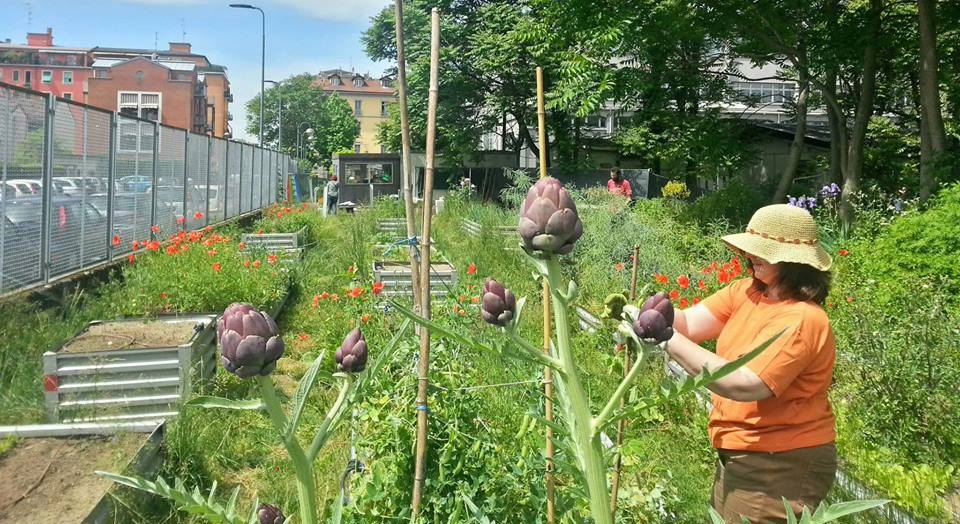

Is it strictly a food forest? Not quite. It is closer to a permaculture-inspired collective garden on a reclaimed woodland slope. But the label matters less than what people are doing. “Food forest” is better understood as a way of treating land than as a fixed template: something to bring back to life, layer by layer, with many hands.
It has not been free of conflict. In 2020 some residents blamed poorly maintained terraces for landslides that disrupted traffic, and others objected to the clearing of trees they saw as protecting the slope. The association argued the real problem was a lack of drainage channels. Whoever was right, the lesson is plain. A hillside is connected to everything downhill from it, and the people living below have a stake in what happens above.
Still, the most striking thing about OrtoCollettivo is how it began: with a law. The group did not squat the land or wait for a developer. It used a public tool built to recover abandoned ground. The idea is still alive in local politics. In December 2024, Genoa’s city council unanimously approved a motion asking the administration to consider funding new collective gardens that bring generations together, citing the same Land Bank. An EU database of nature-based projects, last updated in 2021, lists OrtoCollettivo as ongoing and expanding.
Seattle, USA: Public food on public land
Beacon Food Forest began in 2009 as a final project for a permaculture design course. Its founders, Jacqueline Cramer and Glenn Herlihy, took the idea to city government at their instructors’ urging. The site was seven acres owned by Seattle Public Utilities: a reservoir in Beacon Hill, capped with grass.
After months of community meetings and negotiations, the forest went ahead with city grant funding under the Department of Neighborhoods’ P-Patch community gardening program. Turnout showed the appetite. The first meeting drew 70 people, the third 120.
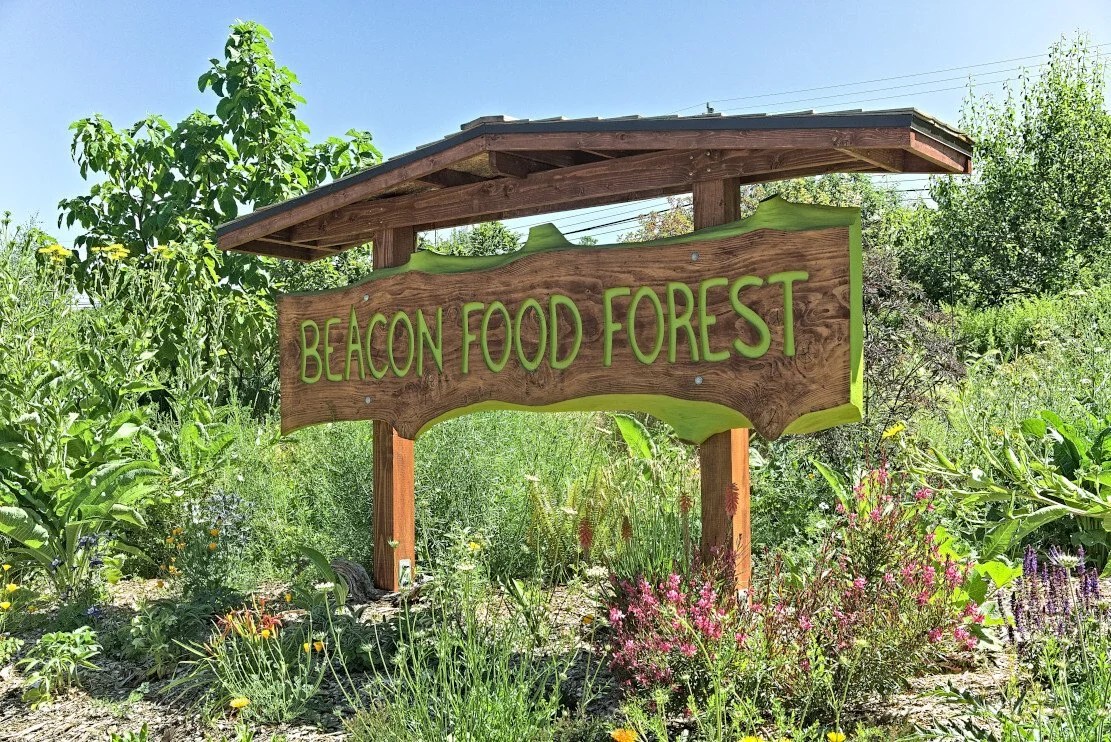
Today about 3.5 acres are cultivated. Apples, pears, plums, quince, medlars and hazelnuts form the upper layers, over an understory of blueberries, goji and honeyberries. There is also a small prairie and wetland restoration that brings back native plant communities such as camas and wapato.
The negotiations were political in the plainest sense. The city worried that a food source open around the clock might shelter unhoused people, attract vandalism or bring rats, so organisers consulted the police on design details such as clear sight lines. The founders also accepted a compromise: about 25 conventional community plots, some dedicated to food banks, alongside the open-harvest forest. In return the project gained insurance for volunteers, covered water costs and eligibility for city grants.
What survived was the rule that mattered most: anyone can harvest. Herlihy sees open foraging as a community taking charge of its own food, deciding what is grown and how it is shared.
The politics did not end with the permit. For years the forest could not pay anyone, even instructors, because a legal provision bars public land from earning money. It became a nonprofit in 2019 and now rents a small portion of the land from the city so it can employ staff. Then the pandemic prompted a rethink. A survey pointed the group toward getting more food to more people, and committees debated the original dream against present-day needs: annual crops or perennials, private plots or foraging, and what open harvest should actually mean.
Beacon Hill is among Seattle’s most diverse neighbourhoods. Roughly half of residents are Asian or Pacific Islander, 22 percent are Black and 8 percent are Latino, and it has the city’s highest share of foreign-born residents. The forest has been reshaped by the people around it. In 2022, efforts to widen its mission to include environmental justice produced a BIPOC Community Garden on an acre of its land. The Seattle Indian Health Board tends a medicinal garden, and veterans grow a victory garden.
Decisions are made through sociocracy, a system built around slowing down to hear every idea and every objection. One organiser describes returning public land to public use as reviving the commons, and as a fairly radical step.
Asked about disaster preparedness, co-founder Cramer offered a sober point. In a catastrophe the pears would be gone quickly. The real harvest is that people learned to work together.
What the three forests share
Set side by side, these projects have more in common than an orchard look. None started on a blank slate. Each started with land shaped by earlier decisions and then left idle: a church garden nobody used, a slope given over to brambles, a reservoir under a lid of lawn. The work in each case was to take what had been handed down and turn it into something more alive.
None of them managed it without finding a route through institutions. Dortmund had EU research funding and a university partner. Genoa had a land-bank law. Seattle had a city grant program and, after negotiation, official acceptance of public foraging. That complicates the romantic picture of food forests as purely grassroots. Laws, grants and permits shape a landscape as surely as spades do, and these forests flourish where committed people find the right lever.
They share limits, too. Reviews find that food forests do well on social and environmental measures such as education, community happiness, wildlife and soil health, but that their finances tend to be shaky. Managing public space, paying for upkeep and getting past regulations come up again and again.
So do the living things nobody invited. At Beacon, restoration volunteers battle introduced weeds and non-native rabbits that browse the plantings. Seattle officials worried about rats before a single tree went in. Open a place to life and you do not get to choose all of the guests.
And open to all is not the same as used by all. About 80 percent of early applicants to OrtoCollettivo were women aged 25 to 40, and Beacon has spent years asking who the forest is really for. On the ecological side the evidence is more encouraging. Reviewers find it convincing that food forests increase the variety of life on a site, particularly where they replace land that had very little.
So are these movements or amenities? None is a protest camp, but each makes a claim about who gets to decide what happens to unused land. Dortmund treats the food forest as a way for a city to adapt to a hotter climate. Genoa uses the law to hand abandoned land to a collective that works it together and trades labour for food. Seattle argues, out loud and in real time, about what a commons is and whom it serves. In each case people are building a small version of the world they want, without waiting for someone else to deliver it. This is called prefigurative politics.
That brings us back to the opening question. In all three places, repairing the land and building the community turned out to be the same work. The soil improved because people showed up. People kept showing up because there was something growing, and something to argue about, and something to share. Neither half comes first.
At a time when many people feel cut off from the living world and from each other, these places offer a modest, concrete alternative: land open to everyone, tended by many, with a harvest that is shared, and not only among humans. They will not solve the climate crisis or fix the food system on their own. But they are where people practice the habits a more resilient society will need: cooperating, negotiating, repairing and sharing.
To see what that looks like, find your nearest one and bring a bag.


Leave a comment